
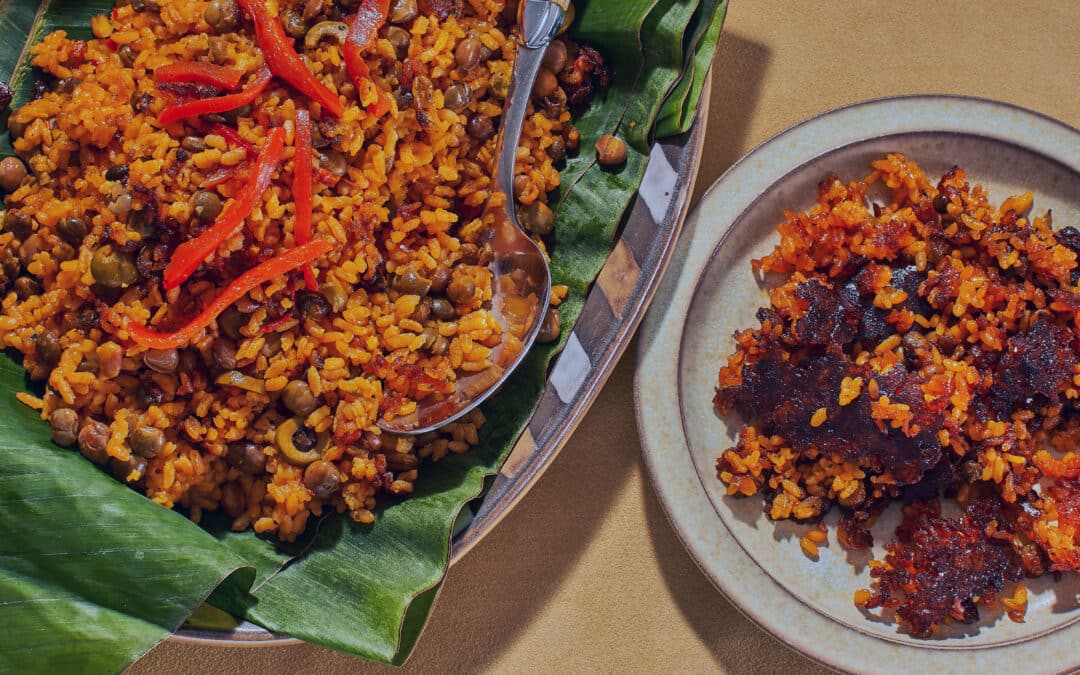
You buy the rice, bring home the beans, and expect the rest to be as simple as putting both into a pot. Then you start looking for an arroz Madame Gougousse recipe and discover that there is no single dish by that exact name. Some recipes use red beans, others use black or pink beans. Some include coconut milk, some rely heavily on epis, and the amount of liquid can change depending on the rice you choose.
Those differences matter because Haitian rice is not just plain rice with beans stirred in at the end. The cooking liquid, seasoning, type of rice, and timing all affect whether the grains stay separate, the beans hold their shape, and the finished pot develops the savory flavor you were expecting.
Use too much liquid and the rice can become soft or sticky. Add too little and it may cook unevenly. Skip the bean broth or aromatics, and you can end up with something that technically contains rice and beans but tastes very different from the Haitian dish you were trying to make.
Understanding what Madame Gougousse rice actually is, which Haitian rice preparation people are usually referring to, and how the ingredients work together makes the process much easier to get right.
What Does “Arroz Madame Gougousse” Actually Mean?
Madame Gougousse is a food brand closely associated with Haitian grocery products. Its rice offerings include jasmine, white long-grain, and parboiled long-grain varieties, rather than a prepared dish called “Madame Gougousse rice.”
That distinction explains why searching for arroz Madame Gougousse can lead to several different recipes.
Madame Gougousse rice can be used as the base for Haitian dishes such as:
- Diri kole ak pwa, rice cooked with beans
- Diri djon djon, rice flavored with Haitian black mushrooms
- Plain Haitian-style white rice served with beans or sauce
- Rice prepared with pigeon peas
- Rice served alongside griot, tassot, stewed meats, fish, or vegetables
One of the most familiar everyday preparations is diri kole ak pwa, Haitian rice cooked together with beans. It is a staple Haitian dish whose flavor comes not only from the beans themselves, but also from aromatics, seasonings, bean cooking liquid, and often Haitian epis.
Which Madame Gougousse Rice Should You Use?
The package you choose affects the finished texture.
Key Food Hollywood currently lists Madame Gougousse scented jasmine rice in several sizes as well as Madame Gougousse parboiled long-grain rice in its Haitian grocery selection.
Jasmine Rice
Jasmine rice has a recognizable aroma and tends to cook into a softer, fragrant finished rice.
Madame Gougousse sells extra-long-grain jasmine rice in several package sizes. It can work well when you want aromatic rice that still separates nicely when properly cooked.
Parboiled Long-Grain Rice
Parboiled rice has been partially processed before milling, which helps produce grains that tend to remain firm and separate during cooking.
Madame Gougousse’s parboiled long-grain product is specifically sold as a rice suitable for stovetop cooking, with package directions calling for covered simmering followed by a resting period.
Neither option automatically makes a better Haitian rice dish. What matters is adjusting your liquid and cooking time to the rice in the package rather than assuming every long-grain rice behaves identically.
How to Make Haitian Rice and Beans With Madame Gougousse Rice
Diri kole ak pwa has many household variations, so there is no single formula that every Haitian family follows. Beans may be red, black, pinto, or another variety. Coconut milk appears in some versions, while other recipes rely primarily on bean broth and seasonings.
The method below provides a practical starting point using Madame Gougousse rice.
Ingredients
For approximately 6 servings, you will need:
- 2 cups Madame Gougousse jasmine or long-grain rice
- 1 cup dried red kidney, black, or pinto beans
- Water for cooking the beans
- 2 tablespoons vegetable or olive oil
- 1/2 medium onion, finely chopped
- 2 to 3 cloves garlic, minced
- 2 tablespoons Haitian epis
- 2 sprigs fresh thyme
- 1 whole Scotch bonnet pepper
- 2 to 3 whole cloves
- About 2 1/2 to 3 cups reserved bean liquid, adjusted as needed
- Salt to taste
- Black pepper to taste
- 1/2 to 1 cup coconut milk, optional
- 1 tablespoon butter, optional
Treat the liquid quantity as a starting point rather than an absolute rule. The exact amount needed depends on the rice variety, pot, heat level, and whether you add coconut milk.
Step 1: Cook the Beans
Place the dried beans in a pot and cover them generously with water.
Bring the water to a boil, then lower the heat and simmer until the beans are tender but not falling apart. Cooking time will vary depending on the bean variety, age, and whether you soaked them beforehand.
Once tender, drain the beans but save the cooking liquid.
That liquid is important. Traditional Haitian rice-and-bean preparations often use the bean broth as part of the cooking liquid for the rice, which gives the grains additional color and flavor.
Step 2: Build the Seasoning Base
Heat the oil in a heavy pot over medium heat.
Add the onion and cook until it begins to soften. Stir in the garlic and epis, then allow the aromatics to cook briefly until fragrant.
Haitian epis is an aromatic seasoning mixture commonly made with ingredients such as peppers, onions or shallots, scallions, garlic, herbs, and acid. Exact recipes vary considerably between cooks and households.
This seasoning base is one of the reasons Haitian rice and beans taste very different from simply mixing cooked white rice with canned beans.
Step 3: Add the Beans and Liquid
Add the cooked beans to the seasoned pot and stir gently so they become coated with the aromatics.
Pour in your reserved bean broth. If you are using coconut milk, include it as part of the total cooking liquid rather than adding it on top of the full amount of water.
Add the thyme, cloves, salt, black pepper, and whole Scotch bonnet.
Keeping the pepper whole allows it to contribute aroma without releasing as much heat as a sliced or punctured pepper. Handle it carefully and remove it before serving if you do not want the dish to be especially spicy.
Bring the seasoned liquid to a boil.
Step 4: Add the Rice
Rinse or prepare your rice according to your preferred method and the package directions.
Add the rice to the boiling seasoned liquid and stir gently so it is distributed throughout the beans.
Allow the pot to cook uncovered or partially uncovered until much of the visible liquid has been absorbed.
This stage requires attention. Covering the pot too early can trap excess moisture, while allowing too much liquid to disappear before steaming can leave the grains undercooked.
Step 5: Lower the Heat and Steam
Once most of the liquid has been absorbed, reduce the heat to low.
Add butter if you are using it, cover the pot tightly, and allow the rice to finish cooking with the trapped steam.
Avoid repeatedly lifting the lid. Steam is doing much of the work during this stage.
When the rice is tender, remove the pot from the heat and let it rest covered for several minutes before fluffing it gently with a fork.
Why Bean Broth Makes Such a Difference
One of the easiest mistakes when making Haitian rice and beans is throwing away the liquid left after cooking the beans.
That broth carries flavor, starch, and color from the beans. Cooking the rice in it allows the grains to absorb those qualities instead of tasting like plain rice sitting beside beans.
For red or black beans, the broth also affects the color of the finished dish.
Several Haitian rice-and-bean recipes specifically reserve the bean liquid and use it later to cook the rice.
This does not mean you have to use every drop. You still need the correct overall amount of liquid for the rice you are cooking.
How Epis Changes the Flavor of Haitian Rice
Epis is another part of the dish that should not be treated as an optional decorative seasoning.
It creates an aromatic foundation before the rice ever enters the pot.
Recipes vary, but epis commonly combines fresh peppers, herbs, onion-family ingredients, garlic, oil, and acidic ingredients such as vinegar or citrus. Chef Gregory Gourdet’s version, for example, includes bell pepper, onion, shallot, celery, scallion, chile, garlic, herbs, oil, vinegar, and lime juice.
You do not need that exact combination for every Haitian rice dish. Family recipes differ. What matters is understanding that the seasoning is built into the cooking process instead of simply sprinkled onto finished rice.
Can You Use Different Beans?
Yes. Haitian rice and beans is not limited to red kidney beans.
Black beans, pinto beans, red beans, and pink beans can all appear in different preparations.
The bean you select changes both flavor and color.
Key Food Hollywood’s Haitian products section currently lists several Madame Gougousse bean varieties, including black beans, red kidney beans, pink beans, pinto beans, cranberry beans, and pigeon peas. The store specifically identifies pink beans as suitable for diri kole ak pwa roz.
That gives you room to experiment without abandoning the basic cooking method.
What Can You Serve With Haitian Rice and Beans?
A seasoned pot of rice and beans can serve as a substantial part of the meal, but it also works especially well alongside other Haitian dishes.
Common pairings can include:
- Griot
- Tassot
- Stewed chicken
- Fried or stewed fish
- Legim
- Fried plantains
- Pikliz
- Avocado
The rice absorbs sauces particularly well, which is one reason getting the grain texture right matters. Rice that becomes overly wet or mushy does not provide the same contrast against braised meats, vegetables, and sauces.
How Is Diri Djon Djon Different?
Another Haitian rice preparation you may encounter while shopping for Madame Gougousse rice is diri djon djon.
This is not simply another version of rice and beans.
Diri djon djon is made using dried djon djon mushrooms, which create the characteristic dark color and earthy flavor of the rice. The mushrooms are traditionally steeped or simmered to produce a deeply colored cooking liquid that is then used for the rice. Peas, lima beans, dried shrimp, aromatics, or other additions can appear depending on the recipe.
Madame Gougousse jasmine rice is also commonly used by Haitian home cooks for this preparation, but the defining ingredient is the djon djon, not the rice brand itself.
Finding Madame Gougousse Rice and Haitian Ingredients in Hollywood, FL
If you searched for arroz Madame Gougousse because you are trying to recreate Haitian rice at home, finding the right rice is only part of the shopping list.
You may also need beans, epis ingredients, Scotch bonnet peppers, coconut milk, seasonings, or ingredients for whatever you plan to serve alongside the rice.
Key Food Hollywood currently has a dedicated Haitian products selection that lists Madame Gougousse scented jasmine rice, parboiled long-grain rice, black beans, red kidney beans, pink beans, pinto beans, pigeon peas, and other Haitian grocery products.
Once you understand what each ingredient contributes, making Haitian rice becomes less about following one rigid formula and more about controlling the balance of rice, liquid, beans, seasoning, and steam. That is what helps turn a bag of Madame Gougousse rice into the kind of flavorful pot you were hoping to put on the table.
Frequently Asked Questions About Arroz Madame Gougousse
Is Madame Gougousse a type of Haitian rice dish?
No. Madame Gougousse is a food brand that sells rice and other Haitian grocery products. The rice can be used to prepare Haitian dishes such as diri kole ak pwa and diri djon djon.
What is diri kole ak pwa?
Diri kole ak pwa is Haitian rice cooked with beans and seasonings. The beans and rice cook together so that the rice absorbs flavor from the bean broth and aromatics.
Which Madame Gougousse rice is best for Haitian rice and beans?
Both jasmine and parboiled long-grain rice can work. Jasmine provides a fragrant result, while parboiled long-grain rice tends to remain firmer. Adjust your cooking liquid and time according to the rice you choose.
Do I need to use Madame Gougousse rice to make Haitian rice?
No. Haitian rice dishes can be prepared with other suitable long-grain rice varieties. Madame Gougousse is popular among Haitian shoppers, but the cooking technique and seasonings are what define the finished dish.
Which beans are used in Haitian rice and beans?
Red kidney, black, pinto, and other beans can all be used. Different Haitian households and recipes favor different varieties.
Do you have to add coconut milk?
Not necessarily. Some versions of Haitian rice and beans include coconut milk, while others rely primarily on bean broth and seasoning. If you use coconut milk, account for it as part of the total cooking liquid.
What is Haitian epis?
Epis is a Haitian aromatic seasoning blend used as a flavor base in many dishes. Recipes vary, but common components include peppers, garlic, onions or shallots, scallions, herbs, oil, and an acidic ingredient.
Why is my Haitian rice mushy?
Too much cooking liquid, excessive stirring, cooking at the wrong heat, or leaving the rice over heat too long can all contribute. The rice variety also affects how much liquid is appropriate.
Why is my rice still hard after the liquid disappears?
The pot may have lost moisture before the grains finished steaming. Reduce the heat once most of the liquid has been absorbed and keep the pot covered so steam can finish cooking the rice.
Is diri djon djon the same as Haitian rice and beans?
No. Diri djon djon is Haitian black mushroom rice. Djon djon mushrooms create its distinctive dark cooking liquid and earthy flavor. Beans or peas may be added, but the mushroom component distinguishes the dish.
Where can I buy Madame Gougousse rice in Hollywood, Florida?
Key Food Hollywood currently lists several Madame Gougousse rice products in its Haitian grocery selection, including scented jasmine and parboiled long-grain rice. Product availability can change, so check current stock if you need a particular size or variety.