

Hollywood, FL is not a single-cuisine town, and its fish counters should not be treated like one either.
Walk through any block of Hollywood and you are moving through overlapping food cultures: Cuban families who grew up eating bacalao on Good Friday, Haitian households where pwason boukannen is a weekend ritual, Dominican kitchens where coconut and fish are inseparable, Jamaican cooks who know that escovitch is not just a dish but a statement. Peruvian, Puerto Rican, Mexican, Venezuelan. The culinary map of this city is dense, layered, and deeply tied to the sea.
What connects all of these traditions is the fish counter. A good fish market in Hollywood, FL is not just a place to buy protein. It is a cultural sourcing point, the place where the ingredients for generational recipes begin their journey from the case to the table.
This guide walks through eight Latin and Caribbean seafood traditions, the fish each one relies on, what to ask for when you are standing at the counter, and one signature preparation that anchors the whole tradition. Whether you grew up cooking these dishes or you are encountering them for the first time, the starting point is always the same: fresh fish, bought well.
Cuban Seafood Traditions: Pescado a la Plancha and Bacalao a la Vizcaina
Cuban cooking has a relationship with fish that runs in two very different directions simultaneously. On one side is the simplicity of grilled fresh fish. On the other is the deep, centuries-old tradition of salt cod, bacalao, brought to the Caribbean through Spanish influence and transformed into something unmistakably Cuban over generations.
Pescado a la Plancha is the everyday expression of Cuban seafood cooking. Plancha means griddle, and the preparation is built around high heat, minimal seasoning, and a fish with enough structure to hold up to direct contact with a hot surface. Red snapper, grouper, and tilapia are all traditional choices. The fish is seasoned with garlic, sour orange juice, cumin, and salt, then cooked on a cast iron griddle or pan until the exterior is golden and the interior is just cooked through. It is simple food done with precision, and the quality of the fish determines everything about the result.
Bacalao a la Vizcaina is the more complex counterpart. Salt cod is rehydrated over 24 to 48 hours through multiple water changes, then layered into a sauce of tomatoes, onions, roasted peppers, olives, and capers. The Vizcaina sauce has Basque origins, carried through Spain into Cuba, where it absorbed local ingredients and became something distinct. The dish is rich, briny, and deeply savory, and it is a centerpiece of Cuban households during Lent and holiday seasons.
What to ask for at the counter: Fresh red snapper or grouper fillets for pescado a la plancha. For bacalao, ask for salt cod, which may be stocked dry or packaged. If your market carries it, look for thick, meaty pieces with consistent white coloring.
Dominican Seafood Traditions: Pescado con Coco
Dominican cooking does not treat coconut as a background note. It is a primary flavor, used with the same confidence that other cuisines use tomato or broth. In pescado con coco, coconut milk is the cooking medium, the sauce, and the soul of the dish.
The preparation begins with a whole fish or large fillets, typically red snapper, sea bass, or mahi-mahi, seasoned with garlic, lime, oregano, and sofrito, then seared until golden. The coconut milk goes in next, along with onions, bell peppers, and sometimes a touch of tomato. Everything simmers together until the sauce reduces into something thick, fragrant, and deeply flavored, the coconut sweetness balanced by the acidity and the richness of the fish.
This is not a delicate dish. It is bold and aromatic, and it fills the kitchen with a smell that announces exactly what kind of meal is coming. Served with white rice and tostones, it is the kind of food that does not need explanation.
What to ask for at the counter: Whole red snapper is the traditional choice and gives the best result because the bones add flavor to the sauce as it simmers. If you prefer fillets, ask for red snapper or mahi-mahi cut thick enough to hold up to braising without falling apart.
Puerto Rican Seafood Traditions: Mojo Isleño
Puerto Rican seafood cooking has a particular genius for sauce, and mojo isleño is its finest expression. The name translates loosely as island sauce, and it earns that designation. It is a cooked tomato-based sauce built on onions, capers, olives, pimientos, bay leaves, and vinegar, spooned over fried or baked fish and allowed to settle into the flesh before serving.
The fish underneath is typically whole fried snapper or kingfish, crispy on the outside and juicy within. The mojo isleño on top is acidic, briny, and slightly sweet, a counterpoint to the richness of the fried fish that makes the whole dish more than the sum of its parts. The dish is served at room temperature as often as it is served hot, which makes it a practical choice for gatherings and family meals where timing matters.
Mojo isleño has roots in the Canary Islands, carried to Puerto Rico through Spanish colonization and adapted over centuries with local ingredients. Like many dishes in the Caribbean canon, it is both a recipe and a record of migration.
What to ask for at the counter: Whole red snapper is the most traditional choice. Ask for the fish to be scaled and gutted if you prefer to skip that step at home. Kingfish, also called sierra, is another excellent option and worth asking about if it is available that day.
Mexican Seafood Traditions: Pescado a la Veracruzana and Aguachile
Mexico’s seafood traditions span coasts, and two preparations in particular have earned a place in the broader Latin culinary conversation: pescado a la Veracruzana from the Gulf coast, and aguachile from the Pacific northwest.
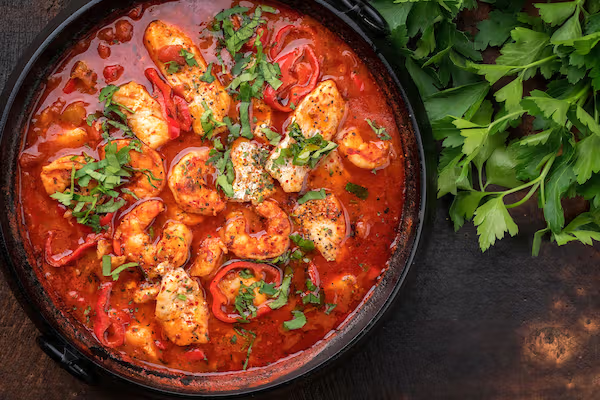
Pescado a la Veracruzana is one of the great fish dishes of the Mexican kitchen. It comes from Veracruz, a port city where Spanish, indigenous, and Afro-Caribbean influences converged, and the dish reflects that history. A whole fish or thick fillets are baked in a sauce of tomatoes, white onion, garlic, green olives, capers, pickled jalapeños, and fresh herbs, usually parsley or cilantro. The result is simultaneously Mediterranean and distinctly Mexican, briny and bright, with a complexity that develops as everything cooks together in the oven.
Aguachile is the Pacific coast counterpart: raw shrimp cured in a marinade of lime juice, serrano or chile de agua peppers, cucumber, and cilantro. It is Sinaloan in origin, closely related to ceviche but more aggressive in its heat and acidity. The shrimp turns opaque from the lime cure without ever touching heat, and the chile brings a direct, clean burn that is fundamental to the dish rather than incidental to it.
What to ask for at the counter: For Veracruzana, whole snapper or grouper fillets. For aguachile, ask for the freshest shrimp available, preferably medium or large, and specify that you will be serving them raw so the counter staff can point you to what came in most recently.
Peruvian Seafood Traditions: Ceviche, Tiradito, and Sudado
Peru has arguably the most sophisticated seafood culture in Latin America, and it has shaped the way the world thinks about raw fish preparation. Three dishes define its range.
Ceviche is Peru’s national dish and one of the most copied preparations in global cuisine. Raw fish, traditionally corvina or sea bass, is cut into cubes and cured in leche de tigre, a mixture of fresh lime juice, aji amarillo, garlic, ginger, and cilantro. Sliced red onion and cancha, toasted corn, go alongside. The lime does not cook the fish in the conventional sense. It denatures the proteins on the surface while the interior remains raw and tender. True Peruvian ceviche is served immediately after preparation, not marinated for hours, which is the most common mistake made outside of Peru.
Tiradito is the Japanese-influenced cousin of ceviche, reflecting the Nikkei culinary tradition that emerged from Japanese immigration to Peru. Fish is sliced thin like sashimi rather than cut into cubes, and the leche de tigre is poured over at the moment of serving. The result is more delicate than ceviche, with a clean acidity and a texture closer to crudo.
Sudado represents the cooked side of Peruvian seafood cooking. Whole fish or large fillets are steamed or gently simmered in a broth of tomatoes, yellow pepper paste, chicha de jora, and fresh herbs until just cooked through. It is a lighter dish than Veracruzana, more broth-forward, and the fish absorbs the aromatics of the cooking liquid as it steams.
What to ask for at the counter: For ceviche and tiradito, the freshest white fish available is essential. Ask specifically what came in that day and choose accordingly. Sea bass, flounder, and snapper all work well. For sudado, a whole fish or bone-in portions give the broth better flavor.
Haitian Seafood Traditions: Pwason Boukannen and Akra
Haitian seafood cooking is bold, direct, and built on epis, the foundational herb and vegetable blend that anchors most Haitian cooking. Garlic, scallions, parsley, thyme, bell pepper, and scotch bonnet blended together form the marinade, the seasoning, and the base for nearly everything.
Pwason boukannen is grilled fish, but the preparation is more involved than that description suggests. The fish, typically whole red snapper or tilapia, is scored deeply so the epis marinade can penetrate. It marinates for several hours before going over coals or under a broiler, developing a charred, herb-forward crust while the interior steams in its own moisture. Served with pikliz, a spicy pickled cabbage condiment, and rice or plantains, it is one of the defining dishes of Haitian coastal cooking.
Akra moves away from whole fish into the realm of fritters. Malanga, a starchy root vegetable, is grated and mixed with dried and salted herring, scotch bonnet, and spices, then fried until crispy. The herring brings a deep brininess that permeates the whole fritter. Akra is street food, celebration food, and Sunday morning food simultaneously, the kind of dish that does not belong to one moment because it belongs to all of them.
What to ask for at the counter: Whole red snapper or tilapia for pwason boukannen. For akra, ask for dried salted herring, which may be stocked near other dried or preserved fish. If it is not available, salt cod makes a workable substitute.
Jamaican Seafood Traditions: Escovitch Fish and Brown Stew Fish
Jamaica’s seafood traditions share a commitment to bold seasoning and the kind of depth that comes from building flavor in layers rather than adding it all at once.
Escovitch fish is fried whole fish, traditionally red snapper or parrot fish, topped with a vinegar-based pickled vegetable sauce of onions, carrots, scotch bonnet, and pimento. The escovitch sauce is poured over the hot fried fish immediately after cooking and allowed to marinate as the fish sits, sometimes overnight. The longer it sits, the more the pickling liquid penetrates the crispy exterior and the flesh beneath. Escovitch has roots in the Spanish escabeche tradition, carried to Jamaica through colonial history and transformed by Jamaican hands into something entirely its own.
Brown stew fish is the braised counterpart. Fish is seasoned, lightly dusted with flour, and pan-fried before being added to a sauce of onions, garlic, tomatoes, scotch bonnet, thyme, and browning, a caramel-colored seasoning that gives the dish its characteristic deep color and slightly sweet undertone. The whole thing simmers until the fish is deeply flavored and the sauce coats every surface. It is comfort food at the highest level.
What to ask for at the counter: Whole red snapper is the most traditional choice for both dishes. Parrot fish is excellent for escovitch when available. Ask for the fish to be scored if you prefer, as the scoring helps both the marinade and the browning penetrate more effectively.
Venezuelan Seafood Traditions: Pescado Frito con Tostones
Venezuelan coastal cooking is built around simplicity and contrast: whole fried fish paired with tostones, twice-fried green plantains that are crispy outside and soft within. The combination is greater than its parts.
Pescado frito con tostones starts with a whole fish, typically red snapper, mojarra, or cachama, seasoned generously with garlic, cumin, lime, and salt, then fried in oil until the skin is shatteringly crisp and the flesh inside is moist and steaming. The tostones go in the same oil in two stages: first fried until softened, then pressed flat and returned to the oil until golden and crisp. A simple garlic sauce or aji sauce alongside, and the meal is complete.
This is beach food in the best sense: uncomplicated, deeply satisfying, and impossible to improve upon with elaboration. The success of the dish depends almost entirely on the quality and freshness of the fish going into the fryer.
What to ask for at the counter: Whole red snapper is the most widely available and reliable choice. Mojarra, a smaller freshwater and coastal fish, is worth asking about by name. If you prefer a larger fish for a bigger gathering, ask what whole fish came in that day and choose the freshest option regardless of specific variety.
Why the Fish Counter Is the Starting Point for All of It
Every tradition covered in this guide has one thing in common: the quality of the fish is not negotiable.
Escovitch can be made with less-than-perfect fish, but it will not taste the way it is supposed to. Ceviche made with fish that is not genuinely fresh is not ceviche in any meaningful sense. Sudado built on a tired fillet produces a broth without depth. Pwason boukannen needs a fish firm enough to hold up to scoring, marinating, and the heat of the grill.
The fish counter at a good market in Hollywood, FL is where all of these meals either begin well or begin poorly. Knowing what to ask for, understanding which fish serves which preparation, and building a relationship with a market that takes freshness seriously is what makes the difference between cooking these dishes and cooking them well.
Hollywood’s Latin and Caribbean communities have always known this. The fish counter is not a transactional stop on the way to the rest of the shopping trip. It is the center of the whole thing.
Find Your Ingredients at Key Food Hollywood
Key Food Hollywood serves the Latin and Caribbean communities of Hollywood, FL with a fresh seafood selection suited to the full range of traditions these families cook from.
Whether you are picking up a whole red snapper for escovitch, asking about fresh shrimp for aguachile, or looking for salt cod ahead of a traditional Cuban Good Friday meal, the goal is always the same: fresh product, knowledgeable staff, and a market that understands what these ingredients mean to the people buying them.
Visit Key Food Hollywood and bring your recipe. The counter is ready.
FAQs
What fish is best for Latin and Caribbean seafood recipes? Whole red snapper is the most versatile option across Cuban, Dominican, Puerto Rican, Jamaican, Haitian, and Venezuelan traditions. Grouper, mahi-mahi, sea bass, and fresh shrimp cover most other preparations. A good fish market in Hollywood, FL should carry most of these regularly.
Can I find ingredients for Peruvian ceviche at a local Hollywood, FL fish market? Yes. The key ingredient is the freshest white fish available on the day you plan to serve it. Ask the counter staff what came in most recently and choose based on that rather than committing to a specific fish in advance.
What is escovitch fish and what fish does it use? Escovitch is a Jamaican preparation of whole fried fish topped with a vinegar-pickled vegetable sauce of onions, carrots, and scotch bonnet. Whole red snapper is the most traditional choice, though parrot fish is also used when available.
What makes bacalao a la Vizcaina different from other salt cod dishes? The Vizcaina sauce combines tomatoes, roasted peppers, olives, and capers in a preparation with Basque Spanish origins that was adapted in Cuba over generations. The combination of briny, sweet, and acidic flavors makes it distinct from simpler salt cod preparations found in other cuisines.
What should I ask for at the fish counter for Haitian cooking? Whole red snapper or tilapia for pwason boukannen, and dried salted herring for akra. If dried herring is not available, ask whether salt cod is stocked as an alternative.
Is pescado a la Veracruzana difficult to make at home? It is one of the more approachable baked fish preparations because the sauce does most of the work. The key is using a good fresh fillet or whole fish and allowing enough oven time for the sauce to reduce and concentrate around the fish.
Why does buying from a local fish market matter for these recipes? These dishes were developed in cultures where fresh, locally sourced fish was the standard. Freshness affects texture, flavor, and how the fish responds to curing, frying, or braising. Buying from a market with strong turnover and knowledgeable staff gives every preparation a better foundation.